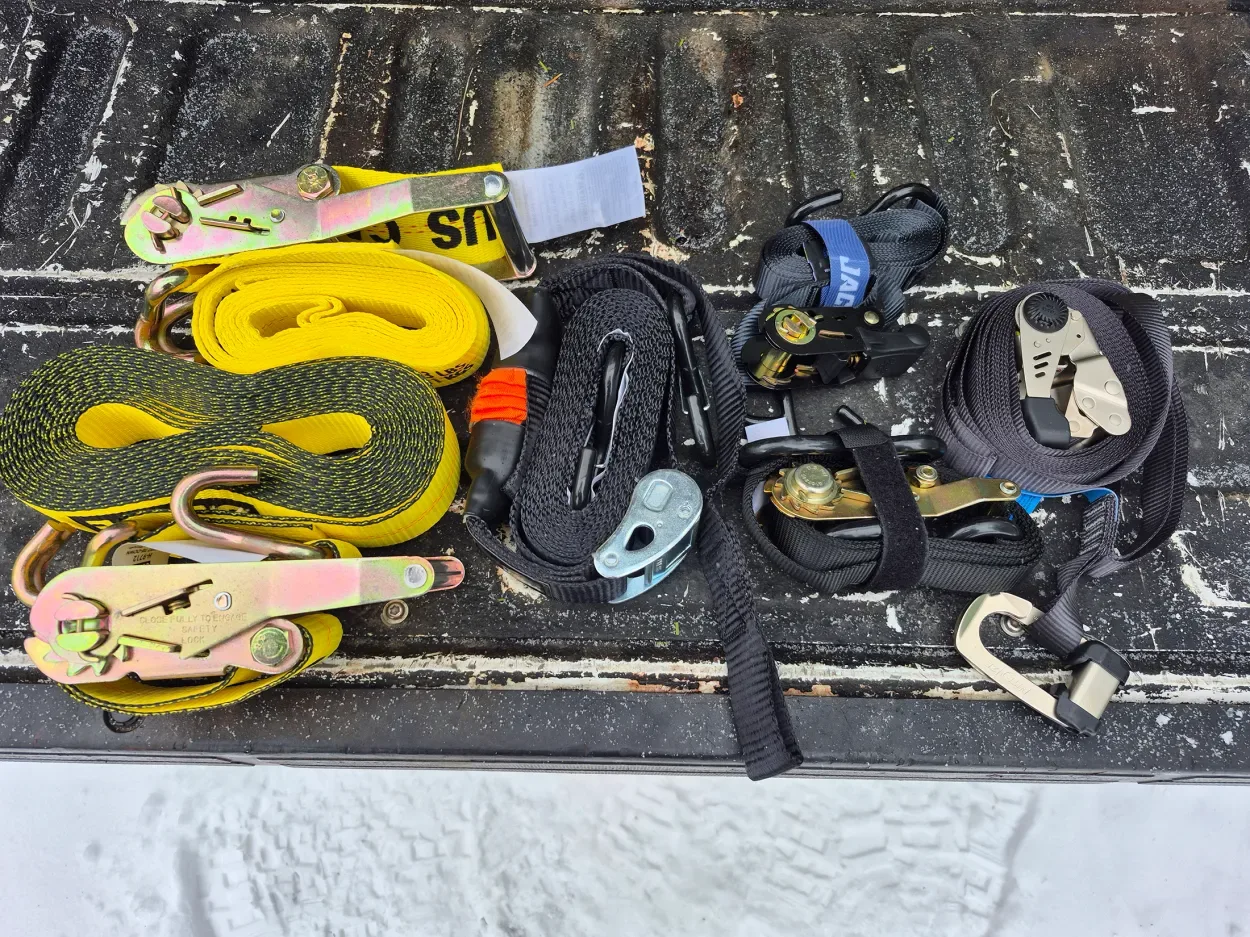
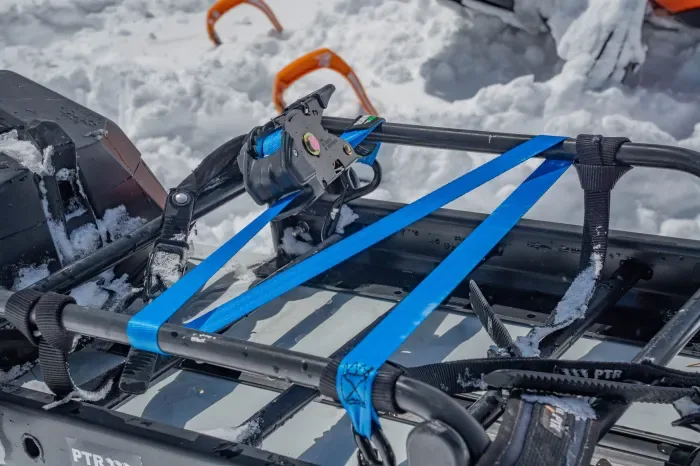
Retractable ratchet straps are popular because they keep loose webbing under control and make storage easier. But convenient retraction is only one part of a good strap. It also needs to suit the load, create and maintain useful tension, and withstand the wear that comes with regular use.
Whether you are choosing straps for a trailer, a pickup truck or outdoor equipment, the following nine factors can help you compare products and ask suppliers better questions.
1. Working Load Limit and Label
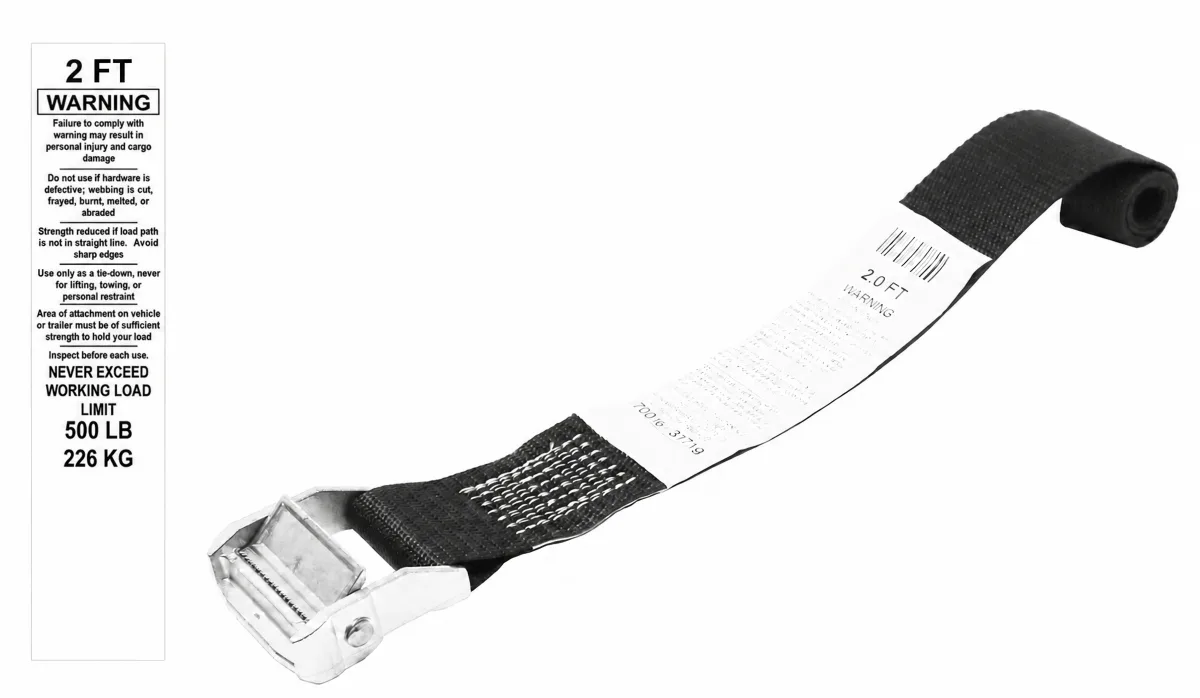
Start with the working load limit (WLL) of the complete strap assembly. This is a rated limit used when determining whether the strap is suitable for an application. Check that the label is legible and identifies the assembly, rather than just an individual component.
Also check the webbing width, usable length and attachment fittings. The appropriate choice depends on the cargo, the securement arrangement, the angle of the straps, the anchor points and the requirements that apply to your situation. A strap with a high rating is not useful if its hooks do not fit the available anchors or its length is unsuitable.
If the label is missing or unreadable, do not assume the rating from the appearance of the strap. Learn more in Working Load Limit vs Breaking Strength: How to Read a Tie-Down Strap Label.
2. Breaking Strength of the Complete Assembly
Breaking strength describes the load at which a sample fails under specified conditions. It is different from WLL and should not be treated as the load for normal use.
The ratchet, hooks, webbing and attachment points work together as one assembly. A strong piece of webbing does not automatically mean the complete strap has the same strength. When reviewing specifications, look for the breaking strength and WLL of the finished assembly, and ask for supporting documentation where needed.
Breaking strength is one comparison point, but it does not tell you how easy the strap is to tighten or how well the webbing resists abrasion.
3. Tightening Efficiency and Handle Effort
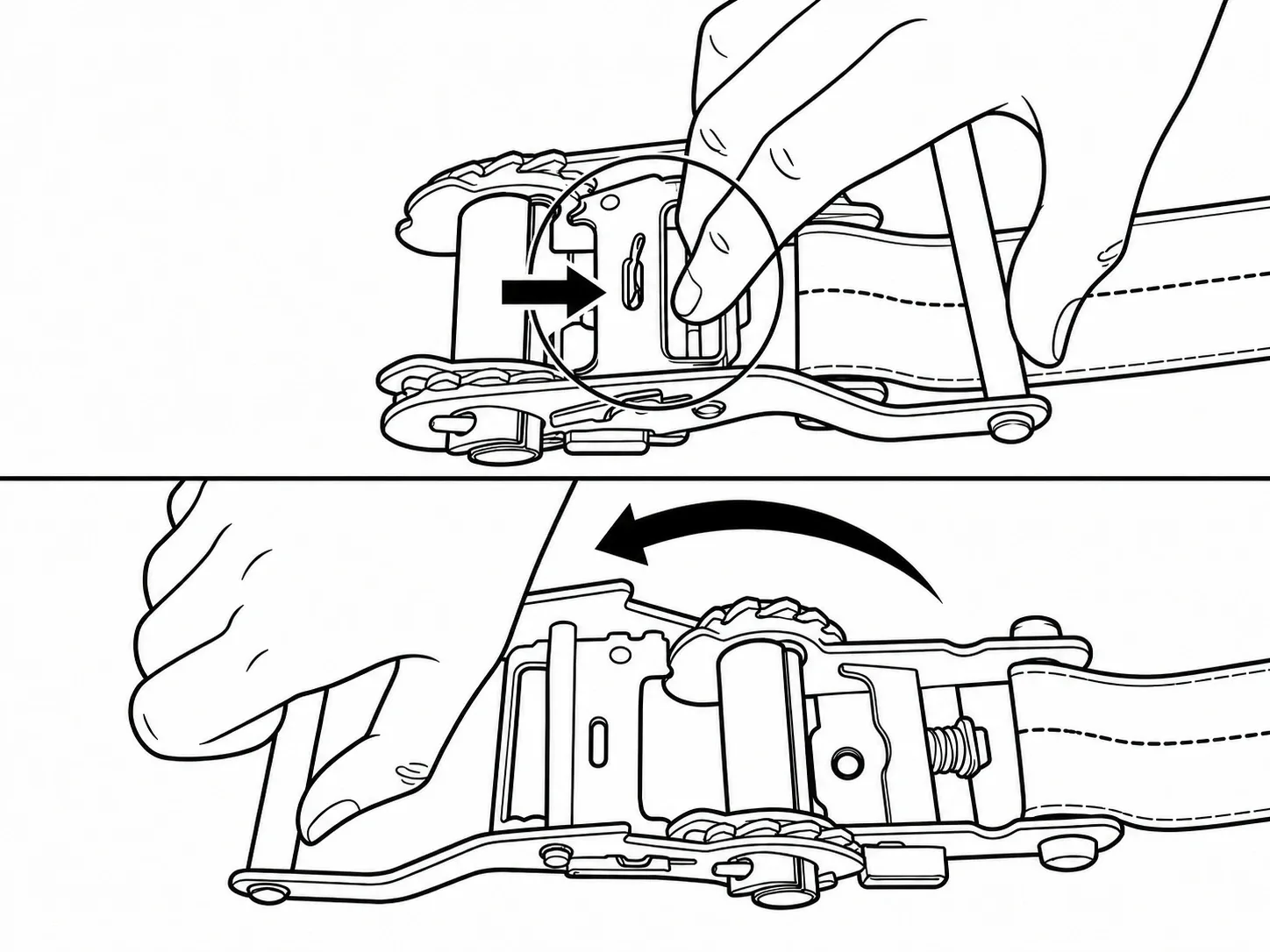
The retracting mechanism takes up loose webbing; you still operate the ratchet to apply tension. A practical strap should make that process manageable, with a handle that is comfortable to grip and move through the available space.
When comparing products, consider:
- Whether the handle is comfortable to operate, including with gloves.
- Whether there is enough room around the cargo to move it.
- How smoothly the ratchet engages and whether the mechanism feels consistent.
- Whether product information explains the tensioning capability or provides comparable performance data.
The tension reached while moving a handle and the tension remaining after the mechanism engages can be different. The amount of webbing wound around the mandrel can also affect the effective spool diameter and the force needed to tighten. These details help explain why two similar-looking straps may feel different in use.
Follow the manufacturer's instructions for threading, locking and any minimum number of wraps. Do not remove required wraps simply to make the handle feel easier.
4. Tension Retention
A strap can feel tight immediately after it is applied, then lose some tension as the webbing and cargo settle. Tension retention describes how well tension is maintained over time under defined conditions.
This is particularly relevant when transporting cargo that can settle or move. When comparing published product information or independent evaluations, look for both the initial tension and the tension remaining later. The elapsed time, starting tension and setup need to be comparable before results can be meaningfully compared.
Some evaluations use a high starting tension, such as 750 lbs, to make differences in retention easier to observe. That is a comparison condition, not a recommended tension for every strap or load. Always select a strap with an appropriate WLL and use it according to its instructions.
A short static comparison cannot predict every road condition. Follow applicable securement requirements and inspect the load and straps as required during a journey.
5. Webbing Abrasion Resistance
Webbing can rub against cargo, trailer edges or other contact surfaces. Abrasion resistance describes how well the material withstands that wear. It is an important dimension because a strap can have a high stated breaking strength yet wear quickly in an abrasive application.
Look for clear information about webbing material, construction and any available durability evidence. When comparing abrasion results, check whether they used the same conditions: the abrasive surface, contact conditions and definition of failure all affect the outcome. A result from one type of surface cannot predict exactly how long the strap will last in everyday use.
Inspect webbing for cuts, fraying, damaged stitching, heat damage and wear, including where it passes through hardware or contacts the load. Use suitable edge protection where needed and remove damaged straps from service according to the manufacturer's instructions.
6. Retracting and Release Mechanism
The reel is the main feature that distinguishes a retractable strap. It should draw in loose webbing without frequent tangling or making the strap difficult to extend.
Consider how smoothly the webbing pulls out and returns, whether it winds evenly into the housing, and whether the release control is easy to find and operate. A useful design should let the user control the webbing during release and retraction. Fast return alone is not necessarily better if the webbing repeatedly twists or jams.
The housing also needs to fit the available space. A larger mechanism may be comfortable to operate, while a compact one may suit a tighter installation. Check the manufacturer's care instructions for the reel; avoid opening a spring-loaded housing unless specifically instructed to do so.
7. Ratchet Hardware and End Fittings
Examine the entire assembly: the handle, locking mechanism, housing, hooks and their connection to the webbing. Look for smooth movement and a clean finish without obvious burrs or sharp edges that could damage the strap.
The end fittings should seat correctly on the intended anchor points. If a hook has a keeper or latch, check that it moves freely and works with the chosen anchor. Hook shape, coating and available clearance may matter as much as the strap's overall dimensions.
Where strength documentation is available, distinguish between a rating for an individual hook or buckle and a rating for the finished strap. Inspect hardware before use and do not use parts that are cracked, distorted or otherwise damaged.
8. Weather, Corrosion and Outdoor Use
Rain, road salt, dirt and sunlight can affect different parts of a strap. Moisture and salt can contribute to corrosion on metal components; dust or mud may interfere with moving parts; and outdoor exposure can affect webbing over time.
Review the product's material and finish information, intended environment and care instructions. If the strap will be used around boats, on exposed trailers or in dirty conditions, ask what information is available about corrosion protection and maintenance.
No single feature guarantees unlimited outdoor life. Clean, dry, store and inspect the strap according to the manufacturer's guidance.
9. Everyday Usability and Storage
Consider the complete task, from attaching the ends to putting the strap away:
- Is the strap long enough for the intended cargo and anchor locations?
- Can the handle and release control be reached in the available space?
- Are the hooks compatible with the anchor points?
- Can the webbing be controlled as it retracts?
- Is the housing a practical size and weight for carrying or storage?
- Are the label and instructions clear and easy to find?
For frequent loading and unloading, smooth handling and convenient storage can save time. For a confined mounting position, housing size and handle clearance may be more important. In every case, start with a suitable assembly rating.
A Simple Evaluation Checklist
Evaluation dimension | What to look for |
|---|---|
WLL and label | A legible assembly rating suitable for the intended application |
Breaking strength | A clearly identified value for the complete assembly, supported by suitable documentation |
Tightening efficiency | A manageable handle, sufficient clearance and smooth engagement |
Tension retention | Clear information about how tension changes under comparable conditions |
Abrasion resistance | Durable webbing and relevant information about wear performance |
Retraction and release | Smooth extension, controlled return and accessible controls |
Hardware and fittings | Compatible hooks, sound construction and an undamaged locking mechanism |
Outdoor durability | Suitable materials, finish and care instructions for the expected environment |
Practical use | Appropriate length, convenient handling, inspection and storage |
If a product's rating is unknown, its fittings are incompatible or a critical component is damaged, convenient features do not make it suitable for the job. Compare only products that meet the needs of the intended application.
Frequently Asked Questions
Does a retractable ratchet strap automatically tighten the cargo?
The reel automatically takes up and stores loose webbing. You still need to operate the ratchet, apply appropriate tension and check the securement according to the product instructions.
What is the difference between WLL and breaking strength?
WLL is a rated limit used for normal use. Breaking strength relates to failure under specified conditions. Use the complete assembly's WLL as an essential part of choosing a suitable strap; do not use breaking strength as the normal working load.
Why does a strap lose tension after tightening?
Webbing may stretch, cargo may settle, or parts of the securement arrangement may move. The cause depends on the setup. Follow applicable requirements and the product instructions for inspection and rechecking.
Does higher breaking strength mean better abrasion resistance?
Not necessarily. Strength and resistance to rubbing or wear describe different properties. Review the assembly rating and the webbing's durability information separately.
What should I do if the strap no longer retracts smoothly?
Check for visible twists, dirt or damage, and follow the manufacturer's inspection and cleaning instructions. If the strap cannot be operated as intended or has damaged components, remove it from service until it has been addressed according to the manufacturer's guidance.
Choose the Right Strap for the Job
The most useful comparison looks at the entire strap: a suitable and clearly marked WLL, dependable tensioning, webbing durability, compatible hardware and a practical retraction mechanism. Together, these dimensions give a more complete picture than one number or feature alone.