Cam buckle straps and ratchet straps both adjust webbing to help secure a load, but they apply tension differently. A cam buckle generally holds webbing that the user has pulled by hand; a ratchet uses a handle and take-up mechanism to apply tension. The better choice depends on the complete assembly's rating, the cargo and its contact surfaces, available anchor points, and the operator's working space—not just on the buckle name.
For an importer or distributor, start by defining the job. Then compare the manufacturer's instructions and working load limit (WLL) for each specific assembly. A cam strap is not automatically suitable for every delicate load, and a ratchet is not automatically the right answer for every heavy one. Either can damage cargo if misapplied or selected without considering the whole securement system.
How the two mechanisms differ
With a typical cam buckle, the operator threads the webbing as directed, pulls the free end by hand to remove slack and apply tension, and releases the lever so the cam grips the webbing. The exact threading path and release method depend on the product. AGM Container Controls' cam buckle instructions illustrate one manufacturer's mechanism; use the instructions for the model supplied to your customer.
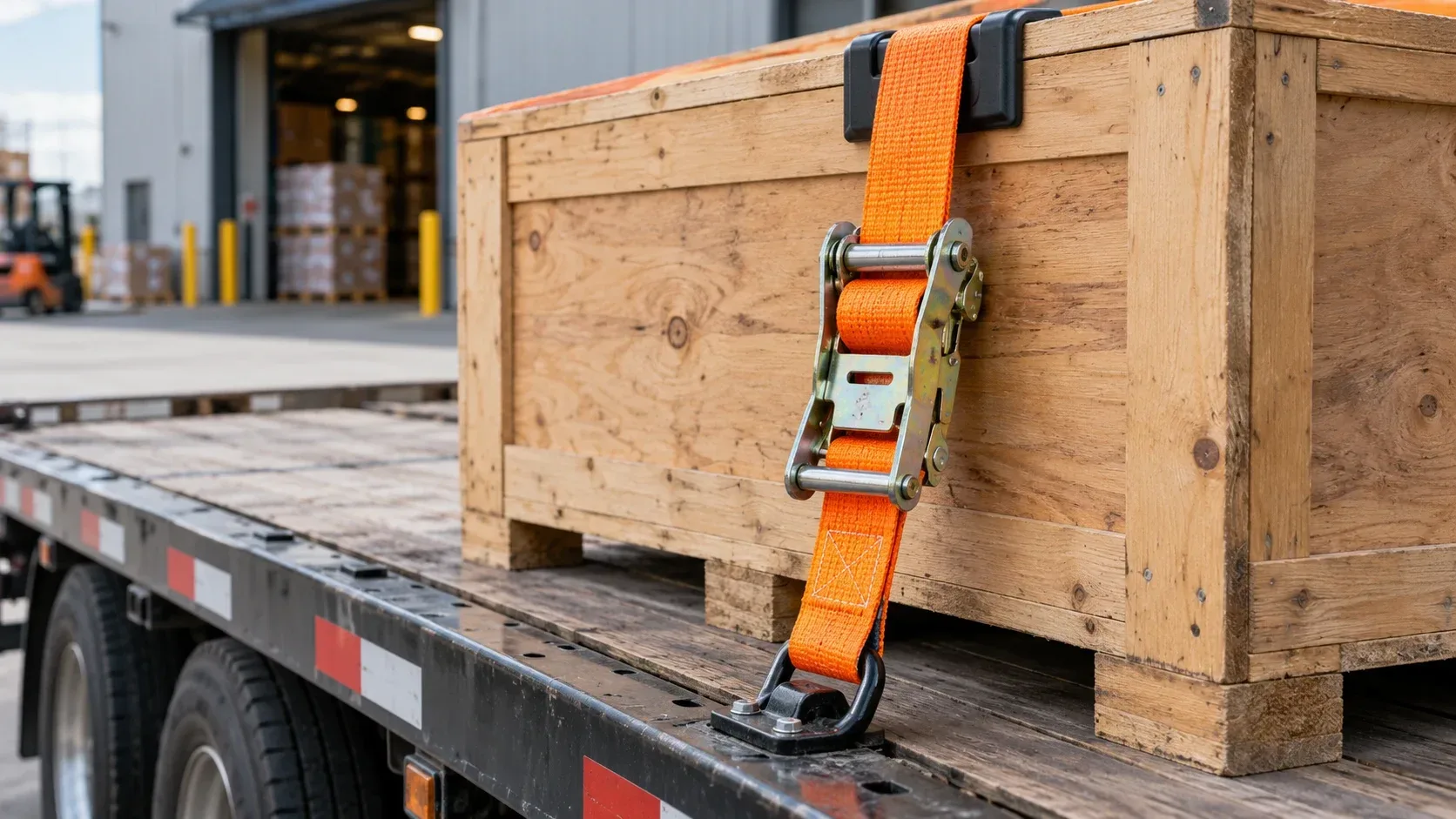
A typical ratchet strap uses a slotted take-up spindle and a handle. After the webbing is threaded and slack removed, the operator moves the handle to wind webbing onto the spindle and apply tension, then places the mechanism in its prescribed locked position. The mechanical leverage can make it easier to apply tension, but it also makes care necessary around crush-sensitive products. See our existing guide on threading, tightening, and releasing a ratchet strap for general background, and follow the instructions for the actual assembly.
Neither method eliminates the need to inspect the strap, connect it correctly, protect contact points, and check the securement as required. A buckle gripping webbing and a ratchet handle closing are individual steps, not proof that the complete load is secured correctly.
Compare the finished assembly, not just the buckle
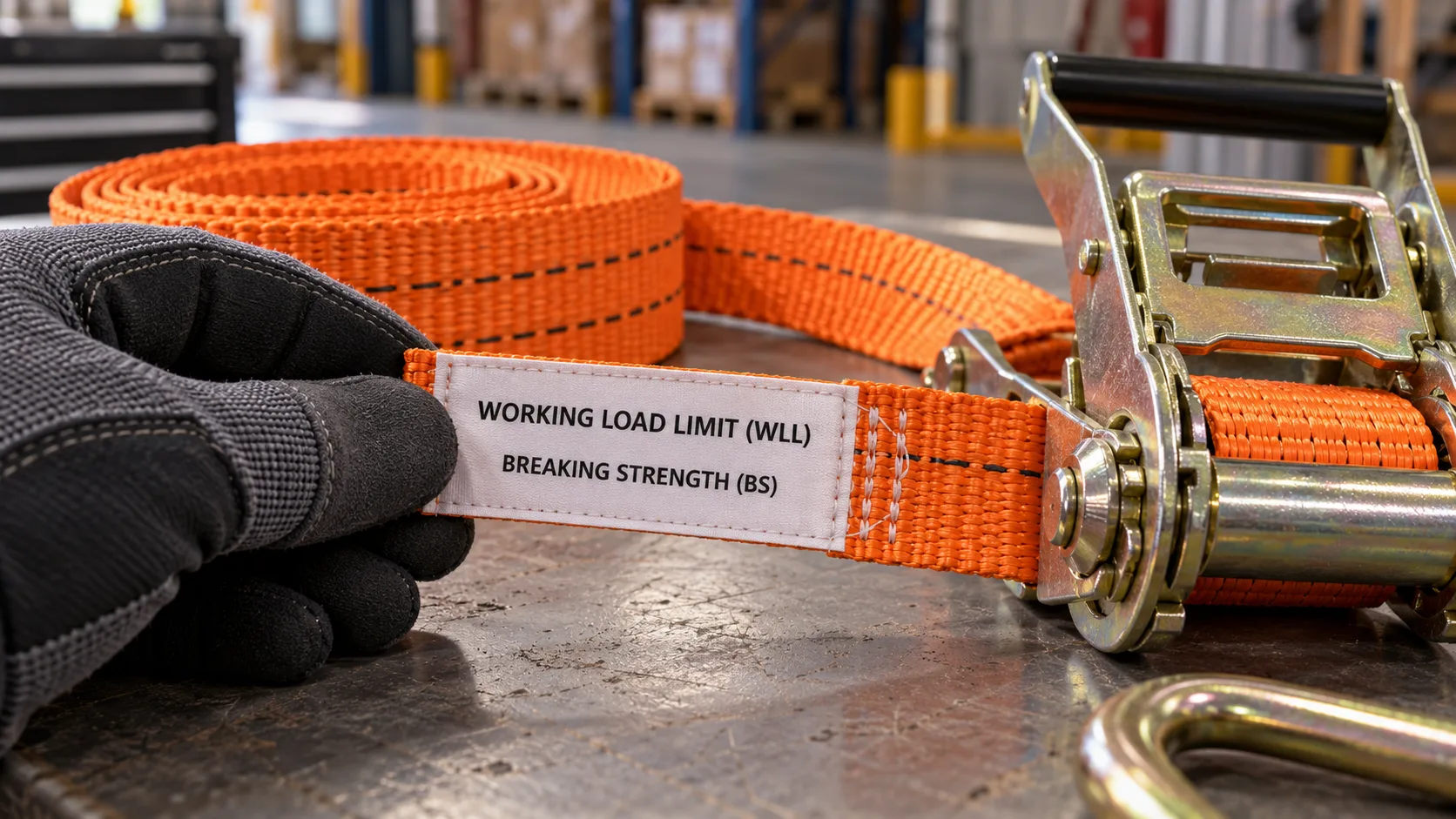
A buckle, a hook, a roll of webbing, and a finished strap are different products. A component's breaking-strength figure does not by itself establish the WLL of an assembly made with that component. Ask for the rating, identification and instructions for the exact webbing, stitching, tensioner and end-fitting configuration being offered.
For example, the product range includes a cam buckle strap with carabiner and an endless ratchet strap. Their end configurations serve different connection arrangements; the listing title's breaking-strength figures should not be treated as interchangeable working load limits. Request the model-specific assembly documentation before comparing ratings or approving a listing.
For the terminology behind those numbers, read working load limit versus breaking strength. Do not choose the larger printed number without confirming what it measures and which component or assembly it describes.
A practical selection comparison
- Tensioning method: A cam is commonly adjusted by hand; a ratchet adds leverage through its handle. Confirm that the user can achieve and maintain the required securement by the approved method.
- Contact sensitivity: A hand-pulled cam can offer a more direct feel during adjustment, but hand tension can still damage a vulnerable surface. Ratchet leverage calls for particular care. In both cases, use appropriate protection and respect the cargo manufacturer's limits.
- Operating space: A cam needs room to reach the lever and pull the free end. A ratchet needs room for handle travel, locking, and release. Check the real installation, including guards and obstructions.
- Frequency of adjustment: Cam operation may suit frequent manual adjustment where a suitable rated assembly meets the job. A ratchet can suit situations requiring its tensioning method, provided it fits and is rated for the application. Actual ease depends on the model and the operator's access.
- Connection style: Hook-end and endless assemblies connect differently. Match the selected fittings to suitable anchors, or specify the intended loop arrangement; do not substitute one for the other simply because both have webbing.
- Documentation: Compare the actual WLL, product identification, usable length, end fittings, instructions, and any available supporting records for the finished configuration.
These are selection questions, not a ranking of all cam and ratchet products. Ratings and operating characteristics vary by model.
Start with the load and its contact surfaces
Record the cargo's dimensions, weight, shape and likely movement, along with the surfaces where webbing, buckles or fittings may touch. A painted component, thin panel, boxed product or irregular frame may require a different arrangement or protective material from a robust item. Confirm the cargo manufacturer's limits and use suitable contact protection where required.
Then identify the attachment points and the intended path of the strap. A compatible-looking hook does not establish that an anchor or vehicle structure is suitable for the forces involved. Check the available capacity and condition of the complete system, including the end fittings and attachment points, using applicable instructions.
An endless strap wraps around the items it binds; it does not automatically attach that bundle to the vehicle. If vehicle securement is required, assess how the load is restrained in the relevant directions using a suitable system. Never treat a neatly bundled package as proof that it is secured for transport.
Match the rating to the actual application
Find the manufacturer-assigned WLL for the complete assembly, confirm the units, and compare the WLL and the other system components against the requirements of the intended use. A WLL is not a universal statement that one strap can secure a cargo item of the same numerical weight in every configuration.
For US commercial transport covered by federal rules, the FMCSA cargo securement overview explains that requirements include the aggregate WLL of the securement system, the way tiedowns are attached, and other general or commodity-specific provisions. The applicable method, minimum number of devices, and other requirements depend on the load and operation. Do not derive a universal strap count from this comparison.
Neither an unlabeled component's strength claim nor a catalog description such as “heavy duty” replaces the information required for a specific finished assembly. For damaged, missing or conflicting identification, obtain the manufacturer's guidance and apply the rules relevant to the operation rather than guessing a rating.
Check the operator's workflow
For a product intended to be used repeatedly, review the whole cycle with a representative sample:
- Connect: Can the operator reach the intended anchors and correctly engage the supplied fittings?
- Adjust: Is there room to pull the cam webbing or move the ratchet handle without contacting the load?
- Confirm: Are the webbing path and the locked or gripping position visible and accessible for inspection?
- Manage the free end: Can excess webbing be secured as required so that it will not interfere with the operation?
- Release: Can the operator stabilize the cargo and release tension according to the manufacturer's instructions without an obstruction?
Ask the supplier to identify the exact model shown in any instructions or sample demonstration. Different hardware can have different release actions or threading paths. Do not add a lever extension or modify a buckle to obtain more tension unless the manufacturer expressly permits the method for that device.
What should a buyer put in the RFQ?
Send the intended cargo and application, target market, available anchor interfaces, desired end-fitting style, required usable length, expected frequency of adjustment, and any contact-surface constraints. State whether a hook-end or endless configuration is being evaluated, and request:
- The finished assembly's WLL and product identification, with units and intended-use instructions.
- The webbing and fitting configuration, dimensional drawing, and measurement definitions.
- The label and packaging information that will accompany that exact model.
- Available test or specification records relevant to the proposed claims, and a representative sample for review.
Review the cam tie-down range and ratchet tie-down range, then send an inquiry with the load, anchor details, and handling requirements. The right answer is the documented assembly that fits the complete application.