E-track and L-track use different rail profiles and fitting interfaces. The practical starting point is to identify the track already installed, then choose a fitting that the relevant manufacturers approve for that exact profile and use. Do not assume an E-track fitting will lock into L-track, or that a similarly shaped fitting is compatible merely because it can be inserted.
For trailer operators, distributors and equipment buyers, the decision extends beyond the rail: the fitting, strap, mounting hardware, supporting structure and load direction all affect the complete securement arrangement. A fitting's standalone rating does not establish the capacity of an installed track system.
Recognize the two interfaces
E-track commonly uses a series of rectangular openings that accept compatible E-track spring fittings or accessories. The fitting must engage and retain as its manufacturer directs. A strap may have an E-track fitting sewn into the assembly, while other arrangements use a compatible track anchor with a separate attachment point.
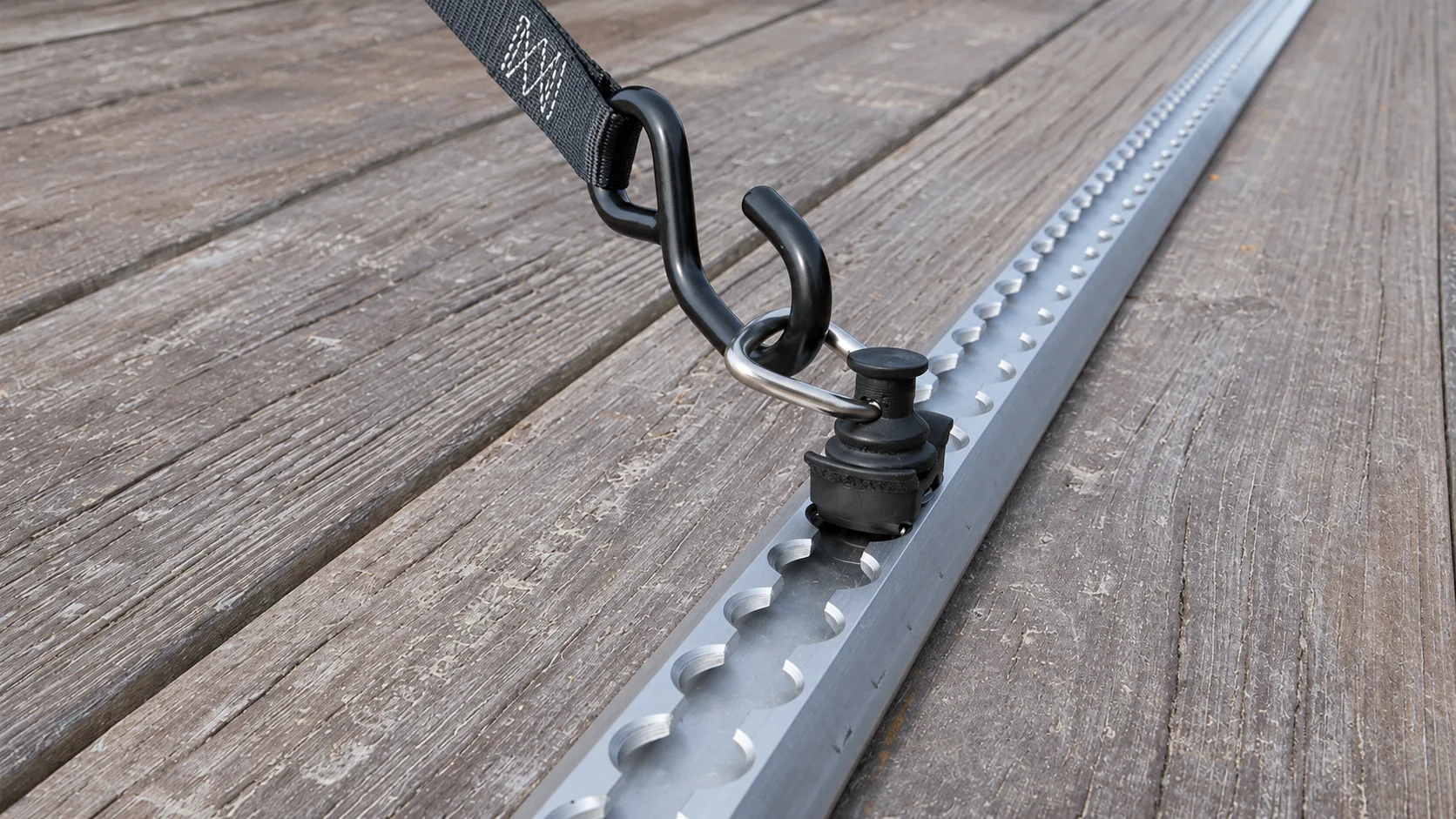
L-track, sometimes called airline-style track, commonly has repeated round openings connected by a channel. Compatible single-stud and double-stud fittings are among the available designs. Their engagement, locking action and permitted direction of use depend on the particular fitting and rail.
Names are a useful starting point, not a dimensional specification. Track profiles and fittings vary. Find the manufacturer and model where possible, compare the actual interface with the supplier's documentation, and ask for confirmation when identification is uncertain. Do not force a fitting into a rail or alter its latch to make it appear to fit.
Compare the complete connection, not just the rail
Start at the trailer structure and follow the load path through the mounting, track, fitting, connector, strap and cargo. Write down the proposed direction of pull and the surfaces each part contacts. Check that the fitting can engage fully, that its retaining mechanism operates as intended, and that a connected hook or ring has room to seat without interference.
An adapter or ring introduces another connection that must be approved and evaluated. Do not assume an ordinary hook can be placed directly into a track opening. If an adapter is proposed, obtain instructions and working load information for that specific adapter and verify compatibility with both the rail and the strap end.
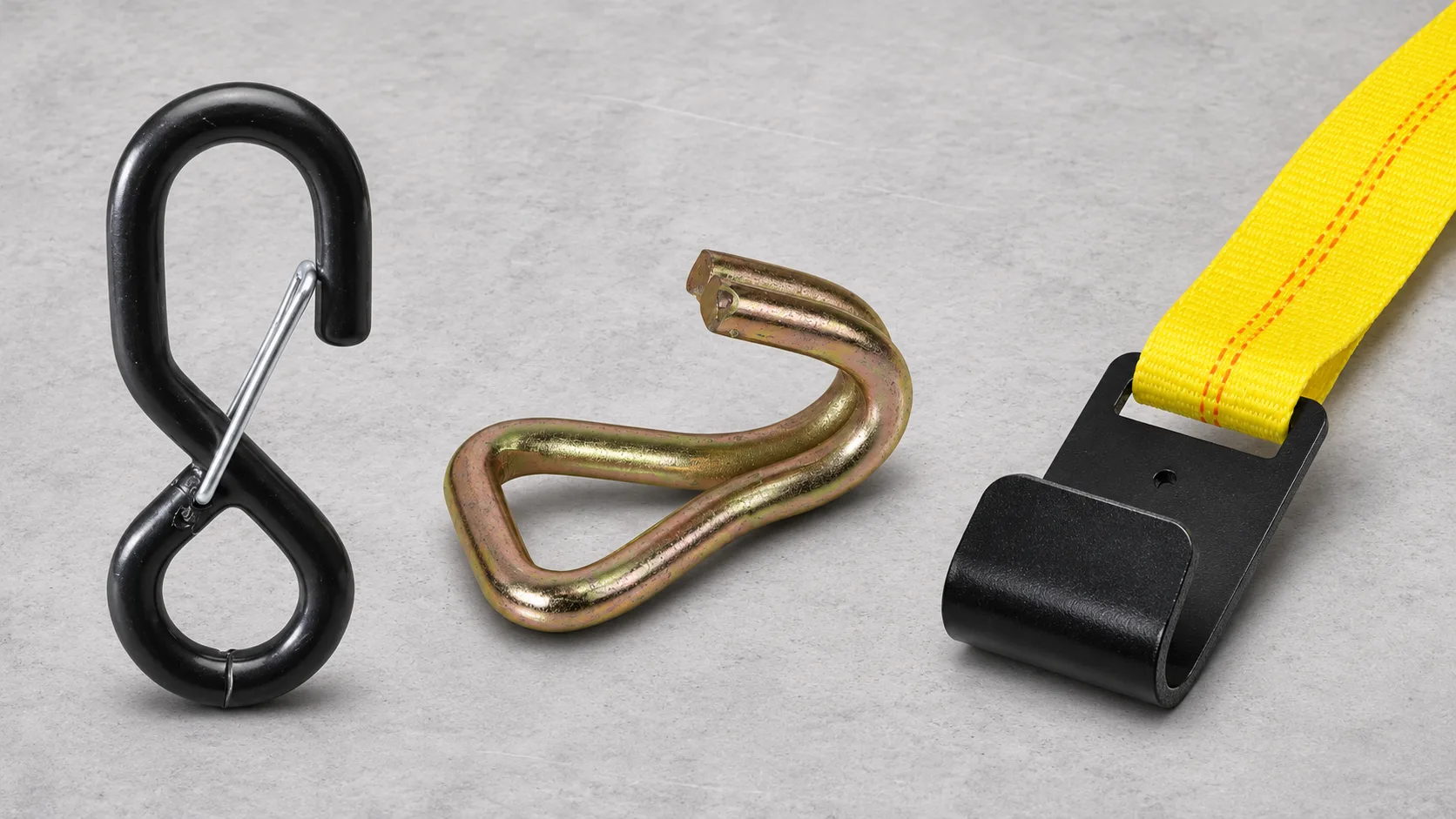
Our guide to tie-down hook types explains why end-fitting geometry and anchor contact matter. It does not establish compatibility between a particular hook and a particular track fitting.
Evaluate the installation as a system
Rail capacity depends on the product and installation. Supporting structure, fastener type and spacing, reinforcement or backing where required, installation quality, corrosion and pull direction can all affect the result. A rail fixed to an unknown panel cannot be assigned a reliable installed capacity from the rail's catalog strength alone.
Use the vehicle and track manufacturers' installation instructions for the specific surface and application. If the backing, fasteners or condition of an existing installation are unknown, ask the responsible installer or manufacturer to assess them. Do not drill, weld or add hardware based on a generic spacing diagram or an assumed rating.
The applicable FMCSA cargo securement rules address the securement system and working load limits for relevant commercial motor vehicle operations. The agency notes that its rules do not require anchor points to be rated and marked. That does not eliminate the need to establish an installation's suitability for the intended use.
Working load limit is not the same as breaking strength
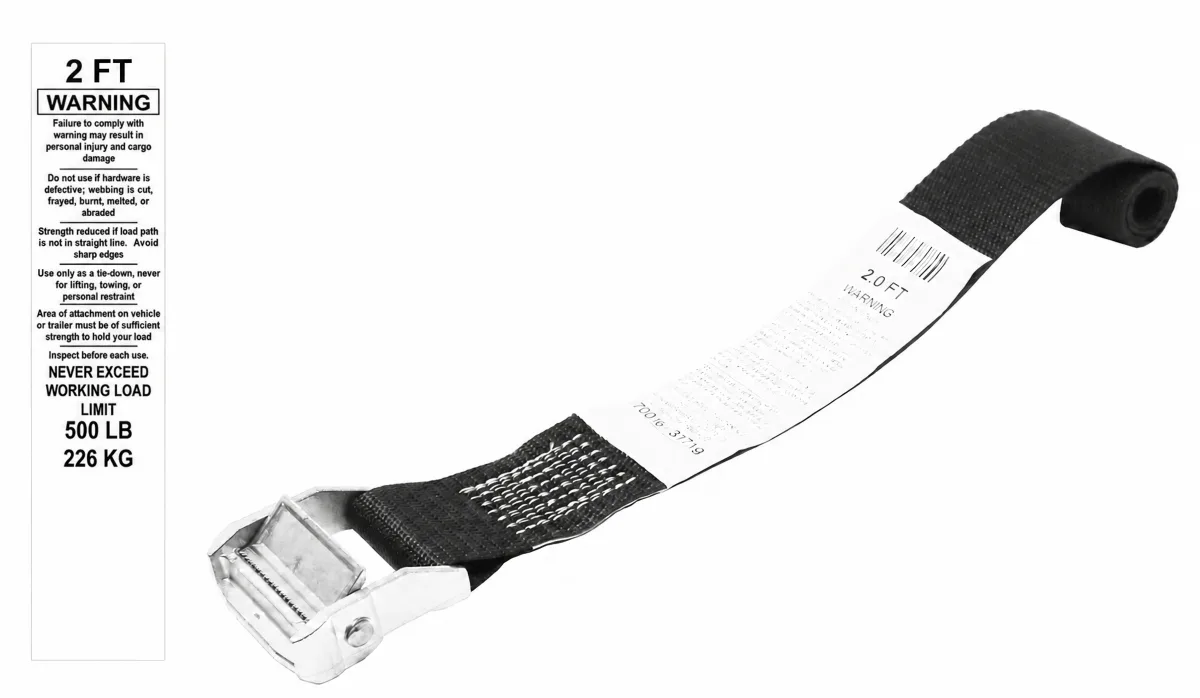
Request the manufacturer's working load information for each relevant component and the approved system or installation details. The strap label, fitting documentation and rail information may describe different products and conditions. Where applicable, follow the governing rules and manufacturers' instructions to assess the securement arrangement and its load direction.
Do not add up slot counts, use a hook's breaking strength as the rating of the track, or assume an installed assembly has the same capacity as its strongest part. The working load limit and breaking strength guide provides a starting point for reading those terms. The actual load plan remains application-specific.
Plan the fitting locations around the cargo
Identify where suitable track is installed and where the cargo needs restraint. Check the space available for the fitting latch, the strap path and the tensioning mechanism. A track position may be accessible while the trailer is empty but blocked by cargo or another restraint once loaded.
Consider whether the load path exposes webbing to sharp corners, abrasion or contact with moving parts. Select appropriate protection and positioning under the equipment instructions and applicable rules. Avoid loading a fitting sideways or at another angle outside its manufacturer's permitted use. The correct location depends on the cargo and installation, not simply on which track profile has more visible openings.
For a fleet or distributor, compare the equipment users already have: a dedicated fitting may reduce the number of separate connections, while a track-compatible anchor may allow a separately approved hook-ended strap to be connected. Neither arrangement is universally interchangeable; verify each proposed combination and its operating instructions.
Inspect and confirm engagement before use
Inspect the rail, fitting, latch and attached strap according to the respective manufacturers' instructions. Look for damage, deformation, corrosion, contamination or other conditions that could prevent proper engagement. Remove damaged equipment from service and obtain a qualified assessment of a questionable installation.
With the cargo safely supported, check that the fitting is seated and retained as the specific instructions require and that the connected strap is aligned for its intended direction of load. Confirm that the release control cannot be unintentionally operated by surrounding cargo. Do not rely on a latch that appears engaged when the fitting is incompatible, damaged or obstructed.
What to send with a compatibility inquiry
Provide the track and fitting manufacturer and part numbers, if known, plus clear photographs of the rail profile and openings. Include the trailer surface and installation details available, proposed pull direction, intended strap configuration, required working load information and destination market. Ask the supplier to identify which measurements, mounting documentation and samples are needed for a proper review.
You can explore our tie-down hardware category and product catalog, then send an inquiry with the track and fitting details. Product availability and compatibility should be confirmed for the exact request; a general catalog listing is not a promise that a specific E-track or L-track fitting is available.