Polyester and nylon are both used in synthetic webbing, but they can behave differently under tension and in wet or abrasive environments. For a tie-down buyer, the useful comparison is between identified webbing constructions and complete assemblies under the same conditions—not between two fiber names in isolation. Ask for the intended application, material specification, test method and finished-assembly working load information before selecting a product.
Polyester often offers lower elongation and lower moisture absorption than nylon when comparable webbing constructions are considered. Nylon may offer useful abrasion resistance and greater elongation in some constructions. Neither statement establishes how an unspecified strap will perform or which material is appropriate for every load.
Start with the complete tie-down application
Describe the cargo, attachment points, transport environment, contact surfaces and destination market. Identify whether the item is a webbing component for assembly or a finished tie-down with a buckle and fittings. For commercial vehicle use, the securement plan must account for the load, system and applicable rules—not only the webbing material.
The published FMCSA cargo securement rules address securement systems for relevant US commercial vehicle operations. Ask the supplier which documentation and instructions apply to the exact configuration. A material comparison is not an installation procedure or a substitute for a load-specific securement plan.
You can review Xiangle's ratchet tie-down straps and webbing category as starting points. Confirm the fiber, construction and available options for the particular product. A polyester listing does not imply that an otherwise identical nylon assembly is offered.
Compare elongation under a stated load
Elongation is the change in length under a defined test condition. For webbing of the same construction and strength, a Web Sling and Tie Down Association specification for interior van securement devices describes nylon as generally more elongating than polyester. That comparison should not be converted into a universal percentage for every fabric or a claim about an unspecified finished assembly.
Ask for the test method, specimen and reference length, applied force, conditioning, measurement point and whether the result describes webbing or the complete tie-down. Compare results using the same units and conditions. Different weave constructions, yarns, treatments and hardware can change the behavior of the assembly.
Lower elongation may be relevant where maintaining a controlled strap path is important; greater elongation can change how an assembly responds under tension. Neither property alone proves that cargo will remain secure or that the assembly can absorb any particular shock. Follow the complete product's instructions and the securement requirements for the load.
Review moisture and drying conditions
Polyester generally absorbs less moisture than nylon. Actual performance still depends on the webbing, treatment and exposure. Ask what the supplier's published properties refer to: conditioned material, wet material or an assembled product. Where wet use is expected, describe whether the strap will encounter rain, spray, immersion or repeated wet-and-dry storage.
Do not equate lower absorption with immunity to water damage, contamination or corrosion in the hardware. Ask for the manufacturer's inspection, cleaning and storage instructions. A wet strap and a dry strap should not be assumed to have identical measured behavior without relevant evidence.
Abrasion, UV and chemical exposure need specific evidence
Nylon is often described as having good inherent abrasion resistance, while coatings and webbing construction can materially affect the performance of either material. Instead of assuming a winner from the fiber name, specify the expected contact surface and ask for comparable test data or an application review. Protect webbing against cutting and abrasion as required by the applicable rules and product instructions.
For outdoor exposure, request information about the actual webbing's UV treatment and test conditions. A color, coating or product description alone does not establish a service life. Inspect for wear and deterioration according to the manufacturer's guidance and remove damaged equipment from service.
If chemicals are present, provide their names, concentrations, temperature and exposure duration. Resistance varies with both the material and the substance. Ask the manufacturer whether the webbing, stitching, hardware and any coating are suitable; do not assume either polyester or nylon is compatible with all acids, alkalis, oils or cleaning agents.
Construction and hardware change the comparison
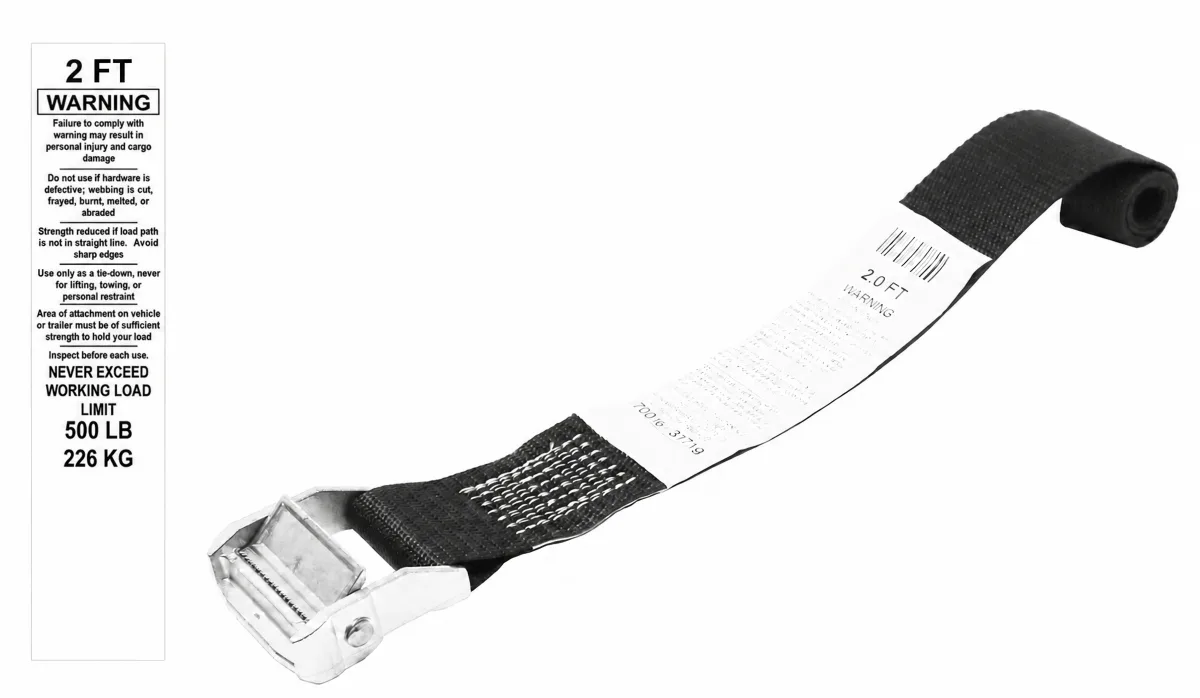
Two straps with the same nominal width can use different yarns, weave density, thickness, edge construction, stitching and end fittings. A component test on a roll of webbing does not automatically establish the working load limit of the strap assembled from it. Buckles, hooks, sewn connections and attachment points all matter to the intended system.
For example, this published polyester webbing product is a material listing, not a complete tie-down rating for an arbitrary assembly. When comparing quotations, ask whether a stated number describes webbing breaking strength, a hardware component or the manufacturer's working load limit for a specified finished strap. Our working load limit guide explains the distinction.
Request comparable information and samples
Give suppliers the same application and request the same basis for both candidates. A useful specification package includes:
- Fiber identification and the webbing's construction, width, thickness and treatment.
- Relevant elongation data with the test method, load and conditioning stated.
- Evidence appropriate to the actual moisture, abrasion, UV or chemical exposure.
- The exact buckle, end fittings, sewn construction and finished-assembly identification.
- Applicable working load information, instructions and documentation for that complete configuration.
- Sample identifiers, proposed changes and the criteria your team will use for review.
Keep a component sample and a complete assembly sample clearly identified. Check dimensions, handling, label and interface against the approved specification; a visual sample review does not prove rated performance. If a test report is supplied, verify which sample and method it actually covers before using it in purchasing or marketing material.
Make the purchasing decision on the documented product
Choose the assembly whose verified characteristics and instructions suit the application. Polyester's generally lower elongation and moisture absorption may be relevant to a buyer's requirements, while a particular nylon construction may warrant consideration for another specified condition. Request written clarification rather than extrapolating an unspecified performance value from the material name.
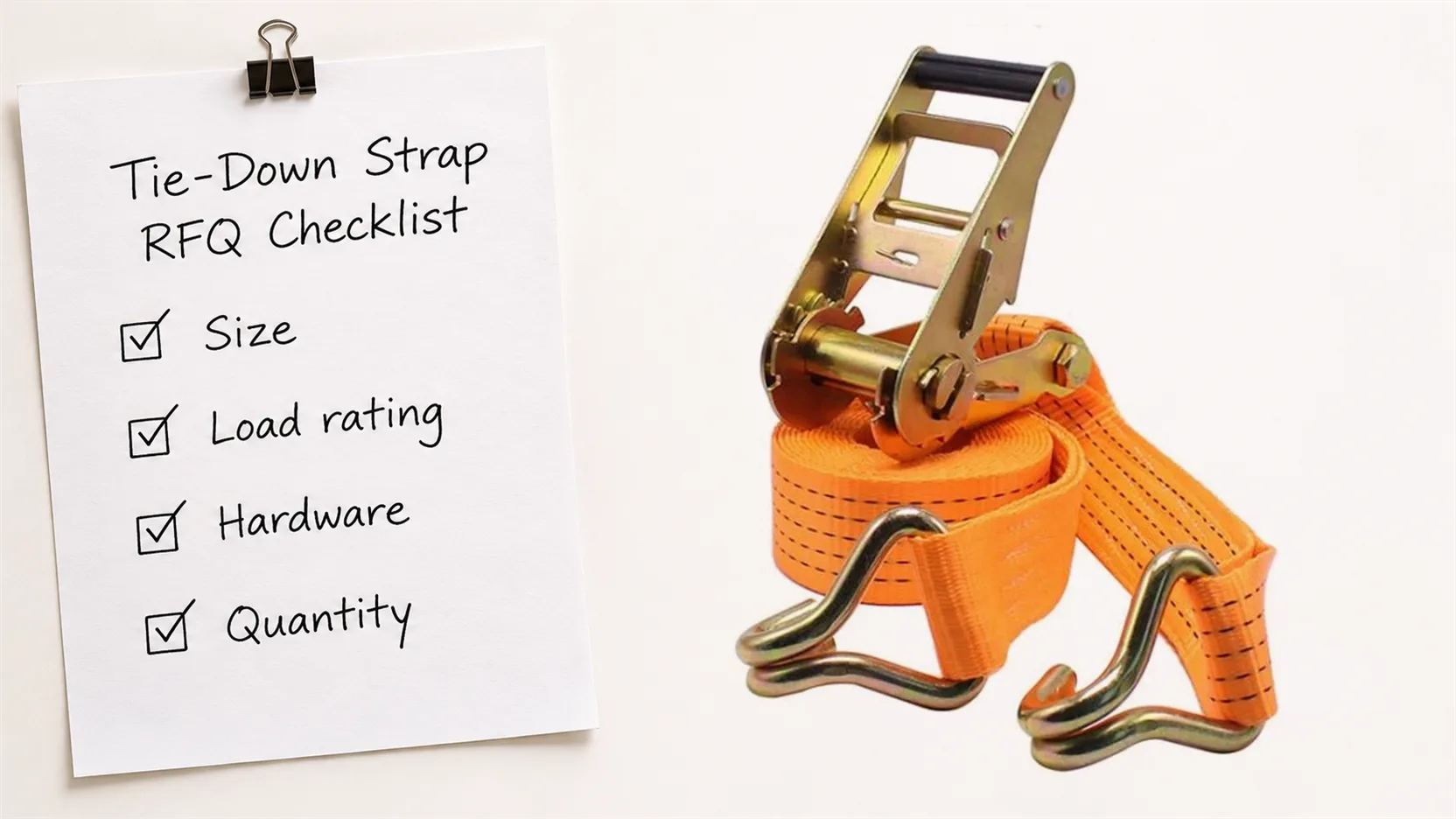
Use the custom tie-down RFQ checklist to organize application and assembly details. To discuss available webbing and complete strap samples, send Xiangle an inquiry with the intended use, environmental conditions, quantities and required documentation. Availability and test evidence must be confirmed for the specific request.